
In Nigeria’s rapidly evolving economy, small businesses and entrepreneurs are playing a crucial role in driving innovation, creating employment opportunities, and contributing to the country’s GDP. However, access to finance and business support has historically been a significant barrier to growth. Recognizing this, Nigerian banks are stepping up with innovative solutions, funding programs, and tailored services designed to empower small businesses and entrepreneurs. In this article, we will explore how Nigerian banks are supporting small businesses, the opportunities for job creation, and the impact on Nigeria’s economy.
The Importance of Small Businesses in Nigeria

Small and Medium Enterprises (SMEs) in Nigeria account for about 96% of businesses and contribute over 48% to the national GDP. According to the Nigerian Bureau of Statistics (NBS), SMEs employ about 84% of the country’s workforce. This underscores the importance of supporting this sector for sustainable economic development.
How Nigerian Banks Are Supporting Small Businesses
1. SME Loan Schemes
Many Nigerian banks now offer dedicated SME loan schemes to provide easy access to credit for small business owners. These loans are designed with flexible repayment plans and competitive interest rates. Banks like Access Bank, GTBank, First Bank, and UBA have SME loans that target startups and growing businesses.
- Access Bank’s Business Loan provides short-term and long-term financing for SMEs.
- GTBank’s Quick Credit for Small Businesses offers collateral-free loans to help entrepreneurs scale operations.
- First Bank’s SME Connect platform allows small businesses to access loans, business advisory, and market insights.
2. Business Advisory Services
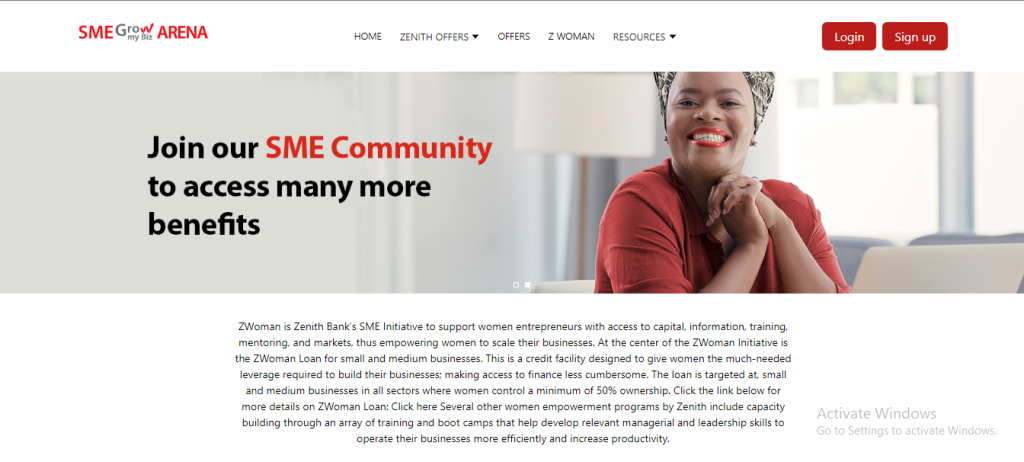
Nigerian banks have also invested in non-financial services to help small businesses thrive. Banks like Zenith Bank and Stanbic IBTC offer business advisory services, workshops, and seminars covering financial management, business development, marketing, and innovation.
3. Digital Banking and Fintech Partnerships
With Nigeria becoming Africa’s fintech hub, banks are collaborating with fintech companies to deliver digital banking solutions. Entrepreneurs can now access financing, payments, and business management tools directly through mobile apps and online platforms. Banks such as Sterling Bank and Wema Bank have launched digital-only platforms (Specta and ALAT respectively) that simplify loan applications and financial services for SMEs.
Read Also: Remote Work: Creating Jobs in Nigeria
4. Grants and Non-Repayable Funding
Some Nigerian banks have gone a step further by offering grants to deserving entrepreneurs. For instance:
- The Tony Elumelu Foundation, supported by UBA, provides non-repayable seed capital, training, and mentorship to thousands of African entrepreneurs annually.
- FCMB’s SheVentures provides interest-free loans and support for women-led businesses.
5. Access to Market Platforms
To help small businesses grow, banks are creating platforms where entrepreneurs can showcase their products and services.
- First Bank’s SME Market Hub allows SMEs to list their products and connect with new customers.
- Sterling Bank’s OneBank app offers marketplace features for SMEs.
6. Capacity Building Programs
Nigerian banks are heavily involved in capacity building. Programs such as:
- Access Bank’s Womenpreneur Pitch-A-Ton Africa empowers female entrepreneurs with funding and business coaching.
- Zenith Bank’s SME Business Workshop trains business owners on financial literacy and digital marketing.
7. Government Collaboration

Many banks partner with government agencies to provide funding and support to small businesses. Notable collaborations include:
- BOI (Bank of Industry) partnerships with commercial banks to provide low-interest loans.
- NIRSAL Microfinance Bank, supported by the Central Bank of Nigeria (CBN), facilitates the disbursement of intervention funds to SMEs.
The Impact on Job Creation
Supporting small businesses has a direct impact on job creation. Here are some ways Nigerian banks’ interventions are creating employment opportunities:
- Business Expansion: Access to credit allows businesses to expand and hire more workers.
- Startup Growth: Entrepreneurs with innovative ideas can launch startups and create new job sectors.
- Female Employment: Targeted women’s funds are enabling more women to become employers.
- Rural Job Creation: By extending financial services to rural areas, banks are helping to reduce urban migration and create jobs in local communities.
Read Also: Women Entrepreneurs: Shaping Nigeria’s Economy
Challenges Faced by Small Businesses Despite Bank Support
While Nigerian banks are doing a lot, challenges remain:
- High-Interest Rates: Some loan products still come with high-interest rates that can burden small businesses.
- Collateral Requirements: Not all businesses have the required collateral to access large loans.
- Limited Reach: Many banks’ support programs are focused in urban areas, leaving rural entrepreneurs underserved.
- Bureaucracy: Complex application processes can discourage small business owners.
Recommendations for Nigerian Banks
- Expand digital lending platforms to rural communities.
- Simplify loan application procedures.
- Lower interest rates for priority sectors like agriculture and manufacturing.
- Increase partnerships with government agencies and NGOs for broader impact.
Conclusion
Nigerian banks are playing a pivotal role in empowering small businesses and entrepreneurs. From SME loans and grants to capacity-building programs and market platforms, banks are not only fueling business growth but also creating massive employment opportunities across the country. However, there is still room for improvement, especially in terms of expanding reach and making financing more affordable. By addressing these challenges, banks can further accelerate job creation and economic growth in Nigeria.
FAQs
Question 1: Which Nigerian bank is best for small business loans?
Answer 1: Some of the best Nigerian banks for small business loans include Access Bank, GTBank, First Bank, and UBA due to their tailored SME loan programs.
Question 2: Do Nigerian banks offer collateral-free loans for small businesses?
Answer 2: Yes, banks like GTBank (Quick Credit) and FCMB (SheVentures) offer collateral-free loans, especially for women and startups.
Question 3: How can I apply for an SME loan in Nigeria?
Answer 3: You can apply for SME loans through bank websites, mobile apps, or by visiting a bank branch. Make sure to have a business plan and financial records ready.
Question 4: Do Nigerian banks offer grants to small businesses?
Answer 4: Yes, some banks like UBA (through the Tony Elumelu Foundation) and FCMB (SheVentures) offer grants and interest-free loans.
Question 5: How are Nigerian banks helping women entrepreneurs?
Answer 5: Nigerian banks support women through special programs like Access Bank’s Womenpreneur Pitch-A-Ton and FCMB’s SheVentures.

